The 2026 Mercedes-Benz S-Class: Still the Ultimate Blueprint for Automotive Innovation
For over half a century, the Mercedes-Benz S-Class has served as the unofficial crystal ball of the automotive world. If you want to know what the average family sedan will look like in ten years, you simply look at what the S-Class is doing today. As an industry veteran with a decade of experience tracking luxury market shifts, I’ve watched this “rolling laboratory” dictate everything from how we survive crashes to how we navigate highway traffic.
In 2026, the stakes are higher than ever. With the rise of electrification and Level 3 autonomy, the S-Class isn’t just a car; it’s a high-stakes financial benchmark. Whether you are looking at mortgage rates to free up capital for a new vehicle or weighing the cost of a long-term lease, understanding the S-Class legacy is essential for any high-intent buyer.
The W116 and W126: Foundations of Modern Safety (1972–1991)
The journey began in earnest with the W116, the first to officially carry the “S-Class” (Sonderklasse) moniker. Its most significant contribution? The Anti-lock Braking System (ABS).
In my years consulting for high-end dealerships, I often remind clients that in 1978, ABS was a space-age luxury. Today, it’s a legal requirement. The subsequent W126 generation (1979–1991) introduced the driver-side airbag and seatbelt pretensioners. These weren’t just “gadgets”—they were the beginning of a safety revolution that shifted how insurance companies calculated risk and premiums.
Expert Insight: “I’ve seen many buyers overlook the historical value of these systems. When you’re looking for the best options in a pre-owned luxury vehicle, the integrity of these early safety systems is why Mercedes-Benz retains such a high resale value compared to its peers.”
The W140 “Cathedral” and the Birth of Stability (1991–1998)
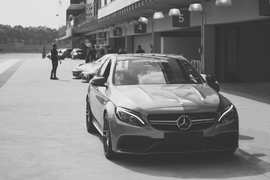
Affectionately known as “The Cathedral” for its over-engineered mass, the W140 introduced Electronic Stability Program (ESP) in 1995. This system—which detects loss of traction and applies brakes to individual wheels—is arguably the greatest life-saving tech of the last 30 years.
Beyond safety, the W140 brought us:
Double-glazed windows: For unprecedented cabin silence.
Soft-close doors: Eliminating the need to slam a luxury door.
Parking Stalks: The mechanical ancestors of today’s digital sensors.
From W220 to W222: Predictive Tech and Lithium Power
By the turn of the millennium, the W220 introduced Distronic, the world’s first radar-based adaptive cruise control. This was the “Patient Zero” for the autonomous driving features we see in every Tesla and Cadillac today.
In 2009, the W221 S400 Hybrid became the first mass-produced vehicle to utilize a lithium-ion battery. If you are currently looking at home loans to install a Level 2 EV charger in your garage, you can thank the W221 for proving that lithium-ion was the future of mobility.
Cost Breakdown: The “S-Class Trickle Down” Effect
| Feature | Year Introduced in S-Class | Year Common in Economy Cars | Estimated Original Option Cost |
| :— | :— | :— | :— |
| ABS | 1978 | 2000 | $1,500+ |
| Airbags | 1981 | 1995 | $2,000+ |
| Adaptive Cruise | 1998 | 2018 | $3,000+ |
| LED Headlights | 2013 | 2022 | $2,500+ |
The 2026 Landscape: Level 3 Autonomy and Beyond
As we move through 2026, the current W223 generation is pushing the boundaries of Drive Pilot. This is true Level 3 autonomy, allowing the driver to legally take their eyes off the road in specific highway conditions.
What’s new for 2026?
Heated Seatbelts: A small but significant luxury that maximizes thermal efficiency in EVs.
The Mercedes Superscreen: A pillar-to-pillar digital interface.
Rear-Seat Frontal Airbags: Extending world-class safety to every passenger.
💰 Money Content Optimization: Making the Financial Move

What This Means for You
The Mercedes-Benz S-Class isn’t just a purchase; it’s a statement of financial strategy. Because these cars lead the market in tech, they also suffer from aggressive initial depreciation. However, they offer a level of safety and prestige that can be leveraged in professional branding and executive networking.
Should You Buy, Wait, or Refinance?
BUY: If you prioritize being an early adopter of Level 3 autonomy and value the highest possible safety rating for your family. The 2026 models are currently at the peak of their lifecycle.
WAIT: If you are looking for the best real estate investment opportunities. With current 2026 mortgage rates fluctuating, tying up $130,000+ in a depreciating asset might not be as lucrative as a property play.
REFINANCE / LEASE: For business owners, leasing an S-Class often provides the best tax advantages and allows you to swap into the next “tech wave” in three years without worrying about resale value.
Best Financial Strategies Right Now (2026)
In my experience, the smartest way to enter the S-Class market is through a certified pre-owned (CPO) 2-year-old model. You let the first owner take the 30% depreciation hit while you enjoy a car that still has 95% of the latest technology. If you are financing, compare home loans or HELOCs against dealership refinancing rates to see where your capital is cheapest.
Case Study: The “New Tech” vs. “Smart Value” Play
Scenario A (The Early Adopter): John buys a brand-new 2026 S-Class for $145,000. He enjoys the latest Mercedes-AMG performance tuning and the newest Superscreen. After 3 years, the car is worth $85,000.
Cost of Ownership: $60,000 plus maintenance.
Scenario B (The Industry Expert): Sarah buys a CPO 2024 S-Class in 2026 for $90,000. It has the same MBUX architecture and nearly all the same safety features. After 3 years, the car is worth $65,000.
Cost of Ownership: $25,000.
Expert Verdict: Sarah saved $35,000—enough to fund a significant portion of a real estate investment or pay down high-interest home loans. Unless you absolutely need the Level 3 Drive Pilot only available in the newest models, Scenario B is the winner.
Mistakes to Avoid That Could Cost You Money
Overlooking Maintenance Costs: An S-Class is a precision instrument. Skipping a service can lead to $10,000+ repairs in the complex air suspension systems.
Ignoring Insurance Premiums: These cars are expensive to repair. Always get an insurance comparison quote before signing the papers.
Failing to Check Tech Compatibility: If you are buying for the “gadgets,” ensure your smartphone and home ecosystem are compatible with the 2026 MBUX updates.
The Verdict for 2026
The Mercedes-Benz S-Class remains the undisputed king of automotive progress. From the early days of ABS to the 2026 era of autonomous driving and hyper-luxury, it defines the path forward.
If you’re ready to experience the pinnacle of German engineering, now is the time to evaluate your position. Whether you’re looking for the best options in a new lease or exploring refinancing for a current vehicle, the S-Class is the standard by which all others are measured.
Ready to see how the S-Class fits into your 2026 financial plan? [Compare latest rates and explore local inventory here to find the perfect match for your lifestyle.]