
The Mercedes S-Class Legacy: Investing in the Blueprint of Automotive Future (2026 Edition)
For over half a century, the Mercedes S-Class has served as more than just a luxury vehicle; it is a crystal ball on four wheels. In my ten years of navigating the high-end automotive and financial markets, I’ve learned one universal truth: if you want to know what features will be standard in a budget hatchback ten years from now, look at the S-Class today.
As we move through 2026, the Mercedes S-Class remains the ultimate test bed for the technologies that redefine car safety, autonomous driving, and real estate investment in the automotive sector. For the savvy consumer or investor, understanding this lineage isn’t just about appreciation—it’s about making informed financial decisions on vehicle depreciation, refinancing, and long-term value.
The W116 (1972-1980): The Birth of Modern Braking
The W116 was the first to officially carry the “S-Class” (Sonderklasse) moniker. While its fuel tank placement was a masterclass in safety engineering, its crowning achievement was the Anti-lock Braking System (ABS).
Launched in 1978 in partnership with Bosch, ABS fundamentally changed the cost of insurance and safety ratings globally. By preventing wheel lock-up, it allowed drivers to steer during emergency braking.
Expert Insight: I’ve seen many collectors overlook the W116, but from a real estate investment perspective—if we treat cars as assets—the W116 models with functioning first-gen ABS are becoming rare, high-value pillars in the vintage market.
The W126 (1979-1991): Maximizing Survival and Resale Value
If the W116 helped you avoid the hit, the W126 made sure you survived it. This generation introduced the driver-side airbag and seatbelt pretensioners in 1981.
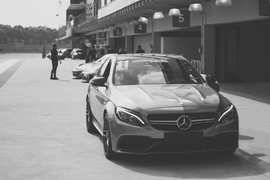
These weren’t just “gadgets”; they were the foundation of the Supplemental Restraint System (SRS). When looking at best options for classic daily drivers, the W126 remains a top contender because its safety tech still holds up to modern scrutiny, keeping insurance premiums surprisingly manageable for a 40-year-old vehicle.
The W140 (1991-1998): “The Cathedral” and Stability Control
Known in the industry as “The Cathedral” for its over-engineered heft, the W140 introduced Electronic Stability Program (ESP) in 1995.
Case Study: The Cost of Control
Scenario A: A driver in a non-ESP vehicle hits a patch of black ice at 50 mph. The result is often a total loss, costing upwards of $40,000 in vehicle replacement and medical bills.
Scenario B: A W140 driver hits the same patch. The ESP sensors detect the skid, apply individual brakes, and keep the car straight. The “cost” is merely a moment of adrenaline.
In my experience, the W140’s introduction of ESP has saved more in home loans (by preventing disability/loss of income) than perhaps any other feature in history. It is now legally mandated in the US and EU.
W220 & W221: The Transition to Intelligence and Power
The W220 (1998-2005) brought us Distronic Adaptive Cruise Control and PRE-SAFE®. This was the birth of “Active Safety”—where the car prepares for an impact by tightening belts and closing windows before the driver even realizes there is a threat.
The W221 (2005-2013) then pivoted to the powertrain, becoming the first mass-produced car to use a Lithium-ion battery in the S400 Hybrid. This tech is the direct ancestor of the batteries found in today’s best options for EVs, including the Tesla Model S and the Mercedes EQS.
The W223 (2020-2026): Level 3 Autonomy and Beyond
The current generation, including the 2026 facelift, introduces Drive Pilot Level 3 Autonomy. This allows the car to take full control in specific conditions, such as heavy traffic on designated highways.
Expert Opinion: While many brands claim “self-driving,” the Mercedes S-Class is one of the few to meet the legal rigors of Level 3. This has massive implications for car pricing and refinancing. A vehicle with certified Level 3 tech will hold its value significantly better than a Level 2 counterpart over a 60-month loan term.
What This Means for You in 2026
Understanding the Mercedes S-Class is essential for any high-net-worth individual or tech enthusiast.
For Buyers: You are purchasing the “Patient Zero” of technology. The cost of an S-Class is high, but the price includes a decade of future-proofing.
For Investors: Historically, S-Class models experience a “U-shaped” value curve. They depreciate heavily for 15 years, then skyrocket as they become “modern classics.”
For Tech Seekers: If you want the best options for safety, don’t wait for them to hit the mid-sized SUV market in 2030. They are available in the S-Class right now.
Should You Buy, Wait, or Lease/Refinance?

In the current 2026 market, the decision hinges on your financial goals:
Buy: If you plan to keep the car for 10+ years. The build quality of the Mercedes-AMG variants and the standard S-Class is designed for longevity.
Lease: Recommended for most. With technology moving this fast (especially Level 3 autonomy updates), leasing protects you from the cost of tech obsolescence.
Refinance: If you currently own a 2022-2024 model, current mortgage rates and interest trends suggest that refinancing your auto loan now could save you 1.5–2% in annual interest, freeing up capital for real estate investment.
Best Financial Strategies Right Now (2026)
Focus on Residual Value: Opt for the “Executive Line” packages. In the resale market, buyers of used S-Class models specifically look for the high-end rear-seat tech.
Tax Advantages: If using the vehicle for business, the gross vehicle weight of certain S-Class trims may qualify for specific Section 179 deductions (consult your CPA).
Maintenance Scarcity: I’ve seen owners lose thousands by skipping “A” and “B” services. In 2026, a documented Mercedes-Benz service history can add $8,000 to your trade-in value.
Cost Breakdown & Pricing Impact
| Feature | 2026 S-Class Status | Expected Standard in Mid-Market | Savings Impact |
| :— | :— | :— | :— |
| Drive Pilot (L3) | Available Now | 2031 | High (Lower Accident Rates) |
| Rear Seat Airbags | Standard | 2029 | Medium (Insurance Perks) |
| Superscreen Dash | Available Now | 2028 | Low (Aesthetic) |
| Heated Seatbelts | New for 2026 | 2032 | Low (Comfort) |
Mistakes to Avoid That Could Cost You Money
Ignoring the “Air Suspension” Health: A failing Airmatic system can cost $5,000+ to repair. Always get a Pre-Purchase Inspection (PPI) if buying used.
Over-Leveraging on High Interest: Don’t let the “prestige” blind you to mortgage rates-style interest on 84-month car loans. If you can’t finance it comfortably over 48-60 months, you’re overpaying.
Underestimating Maintenance: The Mercedes S-Class is a complex machine. Budgeting $2,500/year for maintenance is a realistic expert-level strategy.
The Verdict
The Mercedes S-Class is not just a car; it is a financial and technological statement. Whether you are looking at the Mercedes-AMG performance variants or the serene luxury of the standard saloon, you are investing in the pinnacle of automotive evolution.
As we look at the best options in the 2026 luxury segment, the S-Class continues to offer a unique blend of safety, prestige, and forward-thinking engineering that competitors are still trying to map out.
Ready to experience the future of driving? Explore our latest inventory and compare the best financing and lease rates available this month to ensure your investment in luxury is as smart as the car itself.